
Skip to content
Vintage · Buying guide

Vintage Rolex A serious buyer's guide.

Reference numbers, tropical dials, gilt vs matte, service dials, and how to spot a frankenwatch. The vintage Rolex market is full of redials and undocumented service. Read first.

Vintage Rolex Submariner 5513Photo by Clyde94, via Wikimedia Commons, CC BY-SA 4.0 (source)

What should I know before buying a vintage Rolex?

Five things matter most: (1) Reference numbers — every Rolex reference encodes specific information about generation, case material, and complications. (2) Dial originality — vintage Rolex dials degrade with age, and "service dials" replace original dials during factory service, reducing value. (3) Movement matching — confirm movement number matches the case; mismatches indicate "frankenwatches" assembled from multiple sources. (4) Papers and provenance — original warranty card, box, and service history add 20-50% to value. (5) Condition vs originality — heavy polishing reduces collector value even if it improves apparent condition. Authentication is more important than price.

Reading reference numbers

Rolex reference numbers encode generation, complications, and case material. Submariner family examples:

  • 6204, 6536, 6538 — 1950s Submariners (chronologically earliest). 6538 is the "Big Crown" Bond Submariner with 8mm crown for diving glove use.
  • 5512, 5513 — 1959-1989. 5512 is chronometer-certified; 5513 is the mass-produced version. 5513 ran for 27 years — the longest-running Submariner reference.
  • 1680 — 1969-1979. First Submariner with date. "Red Sub" 1680 has red Submariner text on the dial (1969-1973); "White Sub" has white text (1973-1979).
  • 16800 — 1979-1989. First sapphire crystal. 300m water resistance.
  • 16610 — 1988-2010. Modern Submariner Date with aluminum bezel.
  • 116610 — 2010-2020. Cerachrom ceramic bezel introduced. "Maxi case" redesign.
  • 124060/126610 — 2020-present. Current 41mm production.

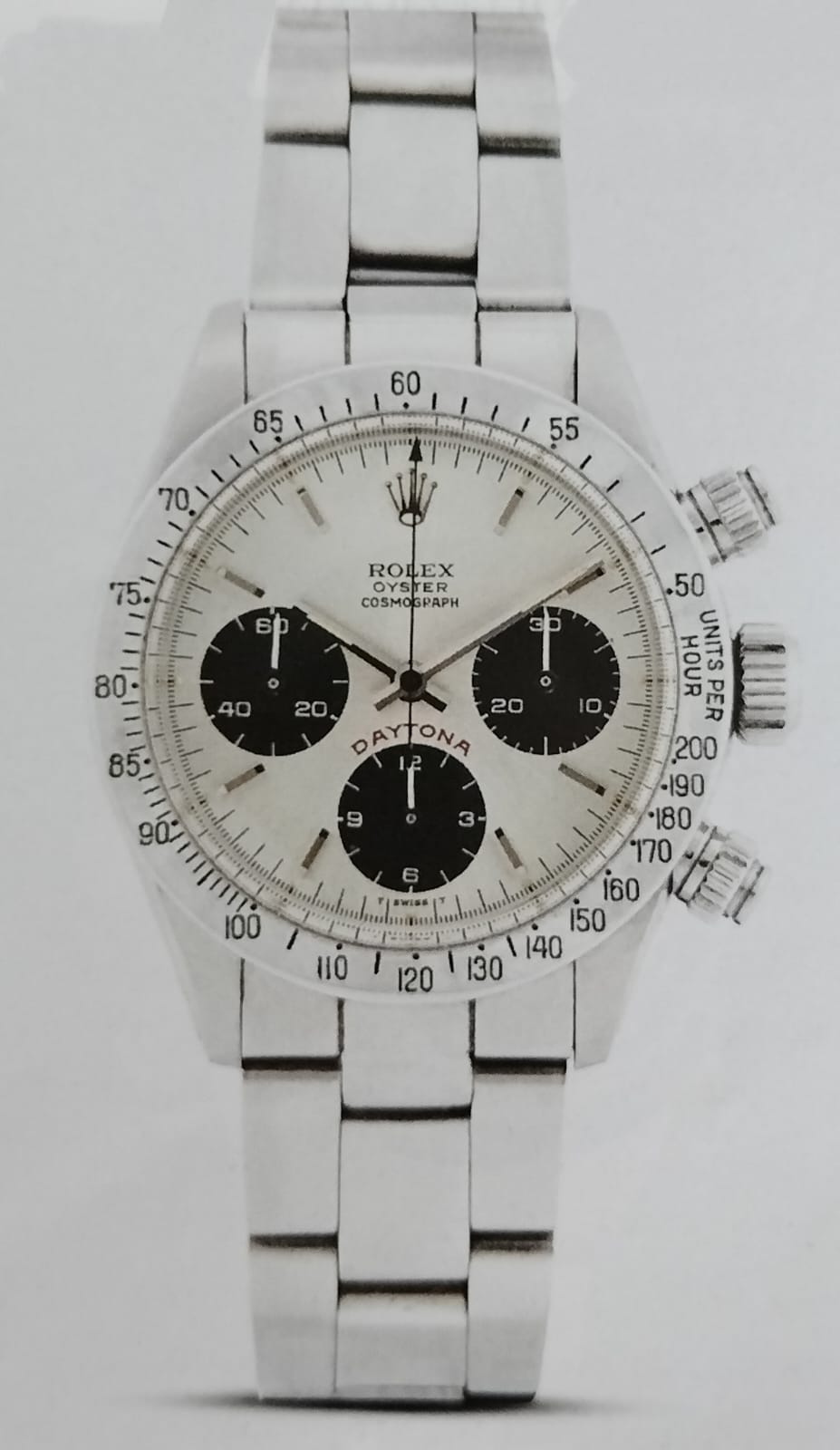
Similar reference taxonomies apply to GMT-Master (6542 → 1675 → 16710 → 116710 → 126710), Daytona (6238 → 6239/6240/6241 → 6263 → 16520 → 116520 → 126500), Datejust, and other families.

Dial originality

Gilt vs matte

Pre-1968 Rolex sport watches used "gilt" dials — black dials with gold-tone printing produced via galvanic plating. Post-1968 Rolex switched to matte dials with white printing for cost reasons. Gilt dials are generally more valuable than matte for vintage collectors. A 1962 Submariner 5513 with original gilt dial sells at $40,000-$80,000; the same watch with original matte dial sells at $25,000-$45,000.

Tropical dials

A "tropical" dial is a vintage dial that has aged from black to warm brown due to UV exposure and chemical changes. Particularly prized on Submariner 5513, GMT-Master 1675, and Daytona 6263 references. Original tropical examples can sell at 3-5× equivalent non-tropical examples. The aesthetic is divisive but collector demand is consistent. Authentication matters because tropical can be induced artificially or faked.

Service dials

When Rolex services a vintage watch and the original dial is damaged or faded beyond repair, Rolex replaces it with a current-production "service dial" matching the original specification visually. Service dials reduce vintage value 30-60% compared to equivalent original-dial examples. Identifying service dials requires expertise — subtle differences in printing weight, lume composition, and metallic tones distinguish original from replacement. The "Service Dial" stamp on the back of replacement dials is the most reliable indicator.

Movement and case matching

Every Rolex case has a serial number; every movement has a separate movement number. Rolex archives these pairings at production. A "matching numbers" watch has its original case and movement together. A "frankenwatch" has movement and case from different watches assembled to look like a single complete reference. Rolex Service can verify case-movement matching through their archive lookup service. The "Punch Card" warranty paper records both serial numbers; a watch with original papers proves matching.

Where to buy

Established dealers with authentication and warranty: Watches of Switzerland Pre-Owned, Bobs, Watchbox, Hodinkee Shop pre-owned, Chronoshark, Phillips (auction), Christie's (auction), Sotheby's (auction), Wempe Pre-Owned, Rolex Certified Pre-Owned (RCPO). Avoid eBay listings without significant dealer reputation, Chrono24 listings without verified dealer credentials, and any seller who can't produce service history or answer detailed questions about reference, year, and movement number.

Read next

Frequently Asked

On vintage Rolex

How do I read a Rolex reference number?

Rolex reference numbers encode the watch family and case material. Submariner 5513 = Submariner family, no-date, automatic, manually-wound era. 1680 = Submariner family with date. 16610 = modern Submariner Date with sapphire crystal. 116610 = post-2008 generation with Cerachrom. 124060 = current 41mm no-date. The first digit indicates generation; subsequent digits indicate the family and complications. Consulting a reference guide (Rolex Reference Books, Rolex Forums, Watchcharts) is essential before purchase.

What is a gilt dial vs a matte dial?

Pre-1968 Rolex sport watches used "gilt" dials — black dials with gold-tone printing for the hour markers, brand text, and minute track. Post-1968 Rolex switched to matte dials with white printing for cost reasons. Gilt dials are generally more valuable for vintage collectors — they have a warmer aesthetic and are clearly pre-modern. A vintage 5513 Submariner with original gilt dial trades at 30-50% more than the same watch with original matte dial.

How do I spot a redial?

Multiple indicators: print font and weight (original Rolex printing has specific characteristics), lume composition and color (radium, tritium, and Super-LumiNova have different aging patterns), spacing of dial elements, brand text alignment, and overall finish quality. The "Service Dial" stamp on the back of replacement dials is the most reliable indicator. Comparing with verified-original reference photos from authoritative sources (Bonham's catalog photography, Phillips auction documentation, the Rolex Vintage book) is essential. When in doubt, have an established dealer or auction house authenticator inspect the watch.

What is the most-collected vintage Rolex?

The Paul Newman Daytona Reference 6239 is the most-collected vintage Rolex — driven by Paul Newman's personal Daytona that sold for $17.7M in 2017. Other top vintage Rolex collectibles: Submariner 6538 ("Big Crown" Bond), 5513 (the longest-running Submariner reference, 1962-1989), 1680 "Red Sub" (1969-1973 with red Submariner text), GMT-Master 1675 in "Pepsi" or "Coke" bezel, Daytona 6263 "Big Red" Daytona, and various Comex-stamped Submariners issued to commercial divers in the 1970s.

What papers should a vintage Rolex come with?

Original Rolex paperwork: warranty card (also called "papers" or "Punch Card" through 1990s), instruction manual, service receipts, original box, hangtags, and (for sport models) the original anchor or red sticker. A vintage Rolex with full set (paper, box, hangtag) trades at 20-50% premium over the watch alone. The watch alone is sometimes called "head only." Always inspect the warranty card serial number against the watch case serial number; a mismatch indicates the paperwork is from a different watch.

What is The Essential Watch Guide?

The Essential Watch Guide is an editorial publication covering luxury watchmaking — Swiss heritage houses, dive watches, vintage timepieces, and the makers worth knowing. Coverage includes Rolex, Patek Philippe, Audemars Piguet, Vacheron Constantin, Omega, Tudor, and dozens more. Editorial focus: history, signature collections, what to look for when buying, and how value holds.

Which Swiss watch brands are the most prestigious?

The "Holy Trinity" of Swiss watchmaking is Patek Philippe (founded 1839), Audemars Piguet (1875), and Vacheron Constantin (1755) — the three houses widely considered the apex of haute horlogerie. Rolex is the most recognized worldwide; Jaeger-LeCoultre supplies movements to many top brands; Blancpain is the oldest continuously operating watchmaker (founded 1735). Independent makers like F.P. Journe and Richard Mille operate at the same tier with smaller production runs.

What makes a watch "Swiss made"?

Swiss law requires that a watch labeled "Swiss made" must have its movement assembled in Switzerland, its movement cased in Switzerland, undergone final inspection by the manufacturer in Switzerland, and have at least 60% of its production cost incurred in Switzerland. The standard is enforced by the Federal Council and the Federation of the Swiss Watch Industry FH.