
Skip to content
Maker profile · Grenchen · Founded 1884

Breitling The chronograph specialist.

8 min readPublished

The chronograph pusher (1915) and the reset pusher (1934). Every modern chronograph descends from those two patents.

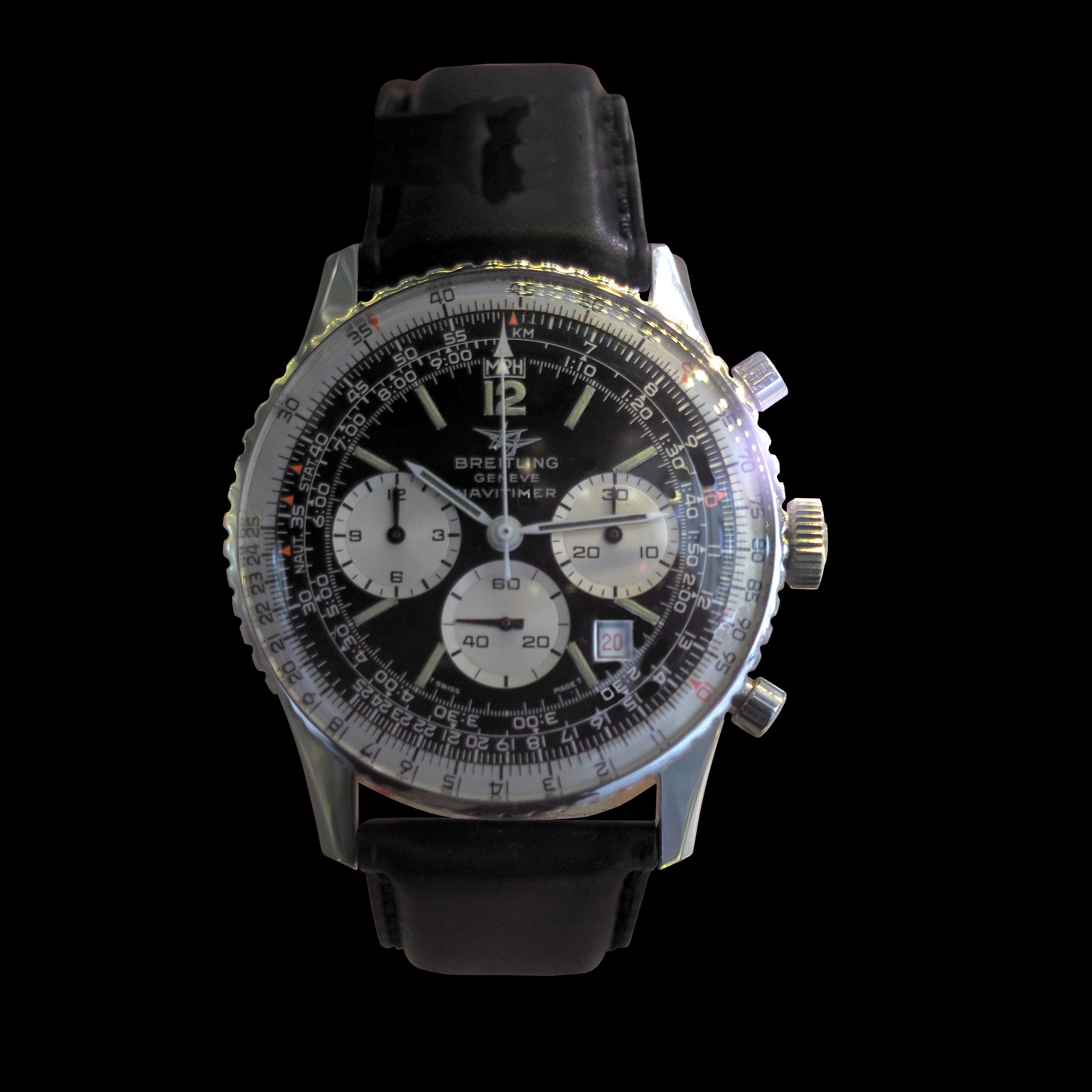
Breitling Navitimer slide rulePhoto by Rama, via Wikimedia Commons, CC BY-SA 3.0 fr (source)

What is Breitling?

Breitling is a Swiss luxury watchmaker founded 1884 in Saint-Imier (now headquartered in Grenchen). The company specializes in chronographs and aviation timing instruments. Léon Breitling registered the first independent chronograph pusher (1915) and the second pusher reset (1934) — innovations that became the foundation of modern chronographs. The Navitimer (1952) is one of the most iconic pilot watches ever produced. Annual production: approximately 150,000 watches.

History

Léon Breitling founded the company in 1884 in Saint-Imier specifically to produce chronographs and timing instruments — the first manufacturer to declare chronograph specialization as a brand identity. The company moved to La Chaux-de-Fonds in 1892 and to Grenchen in 1979. Across the 20th century Breitling supplied timing instruments to military and civilian aviation: the British Royal Air Force, the Royal Canadian Air Force, the Aircraft Owners and Pilots Association (AOPA, from 1954), and various national air forces.

Two patents define Breitling's contribution to modern chronograph design:

  • 1915 — First chronograph with an independent pusher (separated from the crown). Before this, chronograph functions were controlled via the crown — a clumsy arrangement.
  • 1934 — Second chronograph pusher (reset). Before this, reset was controlled via the same pusher as start/stop.

Together these patents define the modern two-pusher chronograph layout used by every chronograph manufacturer since.

Two buttons solve a problem. One button is a compromise. We chose the patent.

Léon Breitling on the dual-pusher patent, 1934

The 2017 acquisition by CVC Capital Partners and the appointment of Georges Kern (former IWC CEO) as Breitling CEO marked a significant rebrand. Kern softened the brand's strictly-aviation positioning toward a broader casual-luxury identity. The catalog was rationalized — fewer references, more design coherence, more partnerships outside aviation (Norton motorcycles, Triumph, Bentley). The 2018-present period is generally regarded as a successful brand rejuvenation.

Signature collections

Navitimer

The slide-rule chronograph. Released 1952. Modern Navitimer B01 Chronograph 41 ($9,000), 43 ($9,500), 46 ($10,400). Slide-rule bezel allows airspeed, fuel burn, distance, and currency calculations in flight. AOPA logo on some references commemorates the 1954 partnership. Cathedral hands, tri-compax dial. The most-collected Breitling vintage references are 1960s Navitimers with original AOPA dials.

Chronomat

The sport-watch chronograph. Released 1984 for the Italian Air Force's Frecce Tricolori aerobatic display team. Steel case, rotating bezel with rider tabs at 12, 3, 6, 9 (the "Frecce" tabs), Rouleaux integrated bracelet. Modern Chronomat B01 42 ($8,900). Limited edition Frecce Tricolori variants are perennial collector favorites.

Superocean

The dive collection. Superocean Automatic 42 ($4,800), Superocean Automatic 46 ($5,400). Released 1957, redesigned multiple times. The modern Superocean is a dress-sport diver — 200m-1,000m water resistance depending on reference, internal or external rotating bezel. Superocean Heritage references preserve the vintage aesthetic.

Breitling makes the chronograph that pilots actually wear. The Navitimer slide rule is a working tool, not a decoration.
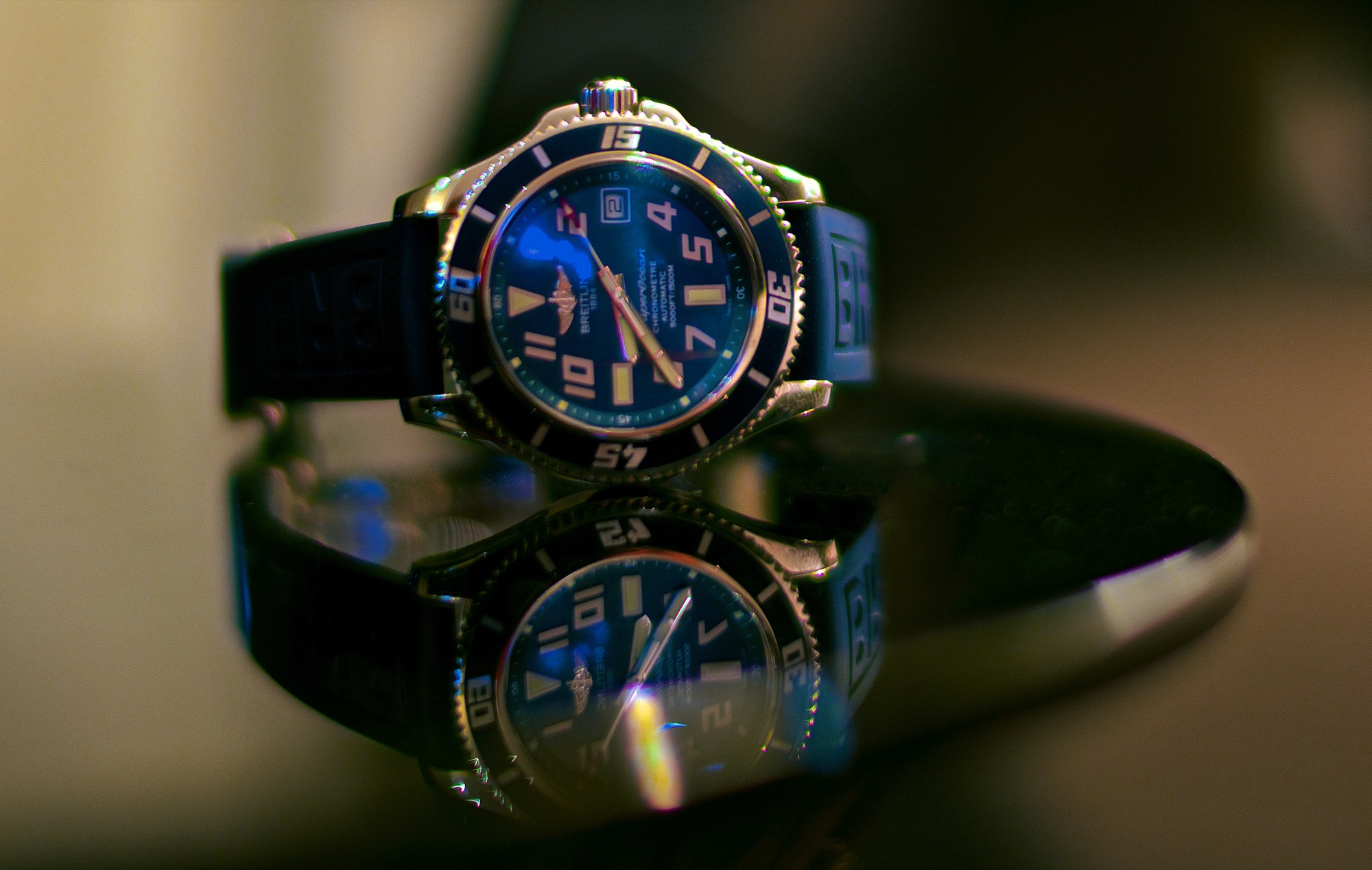
Breitling — Superocean (wrist-on)
Photo by cloud.shepherd, via Wikimedia Commons, CC BY 2.0 (source)

Premier

The dress-watch collection. Released 2018 (revival of a 1940s name). Premier B01 Chronograph 42 ($8,300), Premier Automatic 40 ($4,400). Dressier proportions than the Navitimer or Chronomat — leather straps, Roman numeral dials, classical proportions.

Avenger

The military-tool collection. Avenger Automatic 42 ($5,000), Avenger Chronograph 45 ($5,400). Larger cases, sandblasted bezels, rubber straps. Sold to professional military and aviation users worldwide.

Price tiers

  • Entry — Premier Automatic 40 ($4,400), Superocean Automatic 42 ($4,800), Avenger Automatic 42 ($5,000)
  • Mid — Navitimer Automatic 41 ($5,500), Premier B01 Chronograph 42 ($8,300), Navitimer B01 Chronograph 41 ($9,000)
  • Flagship — Chronomat B01 42 ($8,900), Navitimer B01 Chronograph 46 ($10,400), Avenger Limited Editions (varies)
  • Limited / collector — Co-Pilot, Cosmonaute, Top Time editions, vintage Navitimers (1960s with original AOPA dials), Frecce Tricolori limited editions. $5K-$30K

What's worth knowing

Breitling's in-house Caliber 01 (B01) is among the most respected modern volume-production chronograph movements — column wheel, vertical clutch, 70-hour power reserve, COSC chronometer certified. The B01 sits between ETA/Valjoux 7750 derivatives (which power most of the rest of Breitling's catalog and most other Swiss chronographs in the $5K-$10K range) and Patek/AP-tier hand-finished movements. For a buyer who wants a serious in-house chronograph movement under $10,000, the B01 references are the canonical answers.

The Navitimer's slide rule is functional. Pilots can calculate airspeed, distance, fuel burn, and currency conversion using the rotating outer bezel against the fixed inner scale. The function is mostly ceremonial in the GPS era, but the calculations work. The slide rule is also the only major bezel function on a wristwatch that involves no electronic dependency — a feature the brand still markets.

Brand positioning under Georges Kern is meaningfully different from pre-2017 Breitling. The pre-2017 brand was strictly aviation, with significant marketing investment in the Breitling Jet Team aerobatic squad. The post-2017 brand is broader luxury — partnerships with Norton, Triumph, Bentley, and more diverse celebrity ambassadors (Brad Pitt, Charlize Theron, Adam Driver). The pre-rebrand catalog was larger and more disorganized; the post-rebrand catalog is tighter and more design-coherent. Both eras have their advocates among collectors.

Read next

Frequently Asked

On Breitling

What is the Navitimer?

The Navitimer is Breitling's most iconic chronograph — released 1952 with a circular slide rule rotating bezel that allowed pilots to perform navigation calculations (airspeed, fuel burn, distance, currency conversion) in flight. The Navitimer became the official watch of the Aircraft Owners and Pilots Association (AOPA) in 1954. Modern Navitimer references — Navitimer B01 Chronograph 41, 43, 46 — preserve the slide rule, the cathedral hands, and the tri-compax dial layout. The watch has been in continuous production for over 70 years.

What is the chronograph history of Breitling?

Léon Breitling founded the company in 1884 specifically to produce chronographs and timing instruments. Breitling registered the first independent chronograph pusher (1915) — separating the chronograph control from the crown — and the second pusher reset (1934). These two innovations are the foundation of every modern chronograph. Breitling's identity as "the chronograph house" predates virtually every other Swiss chronograph manufacturer.

Are Breitling movements in-house?

The flagship Breitling Caliber 01 (released 2009) is fully in-house — column wheel chronograph, vertical clutch, 70-hour power reserve, COSC chronometer certified. It powers the Navitimer B01, Chronomat B01, Premier B01, and Superocean Heritage B01 references. Other Breitling chronographs use ETA/Valjoux 7750-derived movements (Caliber 13, 23, 25), which are reliable but less prestigious. When evaluating a Breitling, the B01 designation indicates the in-house movement.

Which Breitling is the best entry?

The Superocean Automatic 42 ($4,800) is the most accessible Breitling sport entry. The Navitimer Automatic 41 ($5,500) is the chronograph entry without the B01 movement. The Premier Automatic 40 ($4,400) is the dress-watch entry. For buyers who want the in-house B01 chronograph, the Premier B01 Chronograph ($8,300) and Navitimer B01 Chronograph 43 ($9,000) are the canonical answers.

Who owns Breitling now?

Breitling has been owned by CVC Capital Partners (a private equity firm) since 2017. Georges Kern — formerly CEO of IWC and a Richemont executive — became Breitling CEO and brought a strategic refresh. The 2018-present period has seen significant brand repositioning toward a casual luxury aesthetic, partnerships with Norton motorcycles and Triumph, and a more design-forward catalog. The brand now operates more like a fashion-luxury brand than the strictly aviation-focused house it was historically.

What is the difference between Chronomat and Navitimer?

The Chronomat (1984) is Breitling's sport-watch chronograph — designed for the Italian Air Force's Frecce Tricolori aerobatic team. Steel case, rotating bezel with rider tabs at the cardinal positions, integrated bracelet ("Rouleaux"). The Navitimer (1952) is the pilot-watch chronograph — slide-rule bezel, leather strap traditionally, cathedral hands, AOPA logo on some references. Different audiences: Chronomat for sportier wear, Navitimer for traditional aviation.

What is Breitling?

Breitling is a Swiss luxury watchmaker founded 1884 in Saint-Imier (now headquartered in Grenchen). The company specializes in chronographs and aviation timing instruments. Léon Breitling registered the first independent chronograph pusher (1915) and the second pusher reset (1934) — innovations that became the foundation of modern chronographs. The Navitimer (1952) is one of the most iconic pilot watches ever produced. Annual production: approximately 150,000 watches. Owned by CVC Capital Partners since 2017.

What is the Navitimer?

The Navitimer is Breitling's most iconic chronograph — released 1952 with a circular slide rule rotating bezel that allowed pilots to perform navigation calculations (airspeed, fuel burn, distance, currency conversion) in flight. The Navitimer became the official watch of the Aircraft Owners and Pilots Association (AOPA) in 1954. Modern Navitimer references — Navitimer B01 Chronograph 41, 43, 46 — preserve the slide rule, the cathedral hands, and the tri-compax dial layout. The watch has been in continuous production for over 70 years.

What is the chronograph history of Breitling?

Léon Breitling founded the company in 1884 specifically to produce chronographs and timing instruments. Breitling registered the first independent chronograph pusher (1915) — separating the chronograph control from the crown — and the second pusher reset (1934). These two innovations are the foundation of every modern chronograph. Breitling's identity as "the chronograph house" predates virtually every other Swiss chronograph manufacturer.

Are Breitling movements in-house?

The flagship Breitling Caliber 01 (released 2009) is fully in-house — column wheel chronograph, vertical clutch, 70-hour power reserve, COSC chronometer certified. It powers the Navitimer B01, Chronomat B01, Premier B01, and Superocean Heritage B01 references. Other Breitling chronographs use ETA/Valjoux 7750-derived movements (Caliber 13, 23, 25), which are reliable but less prestigious. When evaluating a Breitling, the B01 designation indicates the in-house movement.

Which Breitling is the best entry?

The Superocean Automatic 42 ($4,800) is the most accessible Breitling sport entry. The Navitimer Automatic 41 ($5,500) is the chronograph entry without the B01 movement. The Premier Automatic 40 ($4,400) is the dress-watch entry. For buyers who want the in-house B01 chronograph, the Premier B01 Chronograph ($8,300) and Navitimer B01 Chronograph 43 ($9,000) are the canonical answers.

Who owns Breitling now?

Breitling has been owned by CVC Capital Partners (a private equity firm) since 2017. Georges Kern — formerly CEO of IWC and a Richemont executive — became Breitling CEO and brought a strategic refresh. The 2018-present period has seen significant brand repositioning toward a casual luxury aesthetic, partnerships with Norton motorcycles and Triumph, and a more design-forward catalog. The brand now operates more like a fashion-luxury brand than the strictly aviation-focused house it was historically.

What is the difference between Chronomat and Navitimer?

The Chronomat (1984) is Breitling's sport-watch chronograph — designed for the Italian Air Force's Frecce Tricolori aerobatic team. Steel case, rotating bezel with rider tabs at the cardinal positions, integrated bracelet ("Rouleaux"). The Navitimer (1952) is the pilot-watch chronograph — slide-rule bezel, leather strap traditionally, cathedral hands, AOPA logo on some references. Different audiences: Chronomat for sportier wear, Navitimer for traditional aviation.

What is The Essential Watch Guide?

The Essential Watch Guide is an editorial publication covering luxury watchmaking — Swiss heritage houses, dive watches, vintage timepieces, and the makers worth knowing. Coverage includes Rolex, Patek Philippe, Audemars Piguet, Vacheron Constantin, Omega, Tudor, and dozens more. Editorial focus: history, signature collections, what to look for when buying, and how value holds.

Which Swiss watch brands are the most prestigious?

The "Holy Trinity" of Swiss watchmaking is Patek Philippe (founded 1839), Audemars Piguet (1875), and Vacheron Constantin (1755) — the three houses widely considered the apex of haute horlogerie. Rolex is the most recognized worldwide; Jaeger-LeCoultre supplies movements to many top brands; Blancpain is the oldest continuously operating watchmaker (founded 1735). Independent makers like F.P. Journe and Richard Mille operate at the same tier with smaller production runs.

What makes a watch "Swiss made"?

Swiss law requires that a watch labeled "Swiss made" must have its movement assembled in Switzerland, its movement cased in Switzerland, undergone final inspection by the manufacturer in Switzerland, and have at least 60% of its production cost incurred in Switzerland. The standard is enforced by the Federal Council and the Federation of the Swiss Watch Industry FH.