
 Photo by Clyde94, via Wikimedia Commons, CC BY-SA 4.0
 What is vintage watch authentication?
Vintage watch authentication is the practice of verifying a vintage watch is genuine, original, and as-described before purchase. The vintage market over $5,000 today is dealt at meaningful risk of franken-watches (parts swapped from other watches), redialed pieces (cosmetic restoration that destroys provenance), and outright forgeries. The $5,000–$50,000 segment is where buyer-side authentication matters most — the price ladder is high enough that forgers can clear restoration costs and still profit, but not so high that the watch will pass through a major auction house and its in-house specialists. Authentication at this segment combines reference-number research, dial and hand inspection, case-proportion analysis, movement examination, and papers verification, ideally with a paid watchmaker report on anything over $5,000.
Reference number anatomy
Every Swiss watch carries a reference number stamped between the lugs (or, on some older pieces, on the case back). The reference identifies the model and variant. The serial number, stamped separately, identifies the production order. Together the pair tells you what year the watch was made and which variant it is — and that is the foundation of every authentication.
A Rolex Submariner reference 5513 is a no-date Submariner produced from 1962 to 1989, with roughly 750,000 to 1 million pieces made across the run. A Patek Philippe reference 3919 is a 36mm white-gold Calatrava produced from 1985 to 2006. Knowing the reference is knowing the spec sheet: dial layout, hand style, bezel type, case material, movement caliber, crown size. Searching the reference against maker archives or a verified database (Hodinkee Reference Points, Crown & Caliber’s catalog, brand-specific resources like Mondani for Rolex) tells you what the watch should look like as it left the factory.
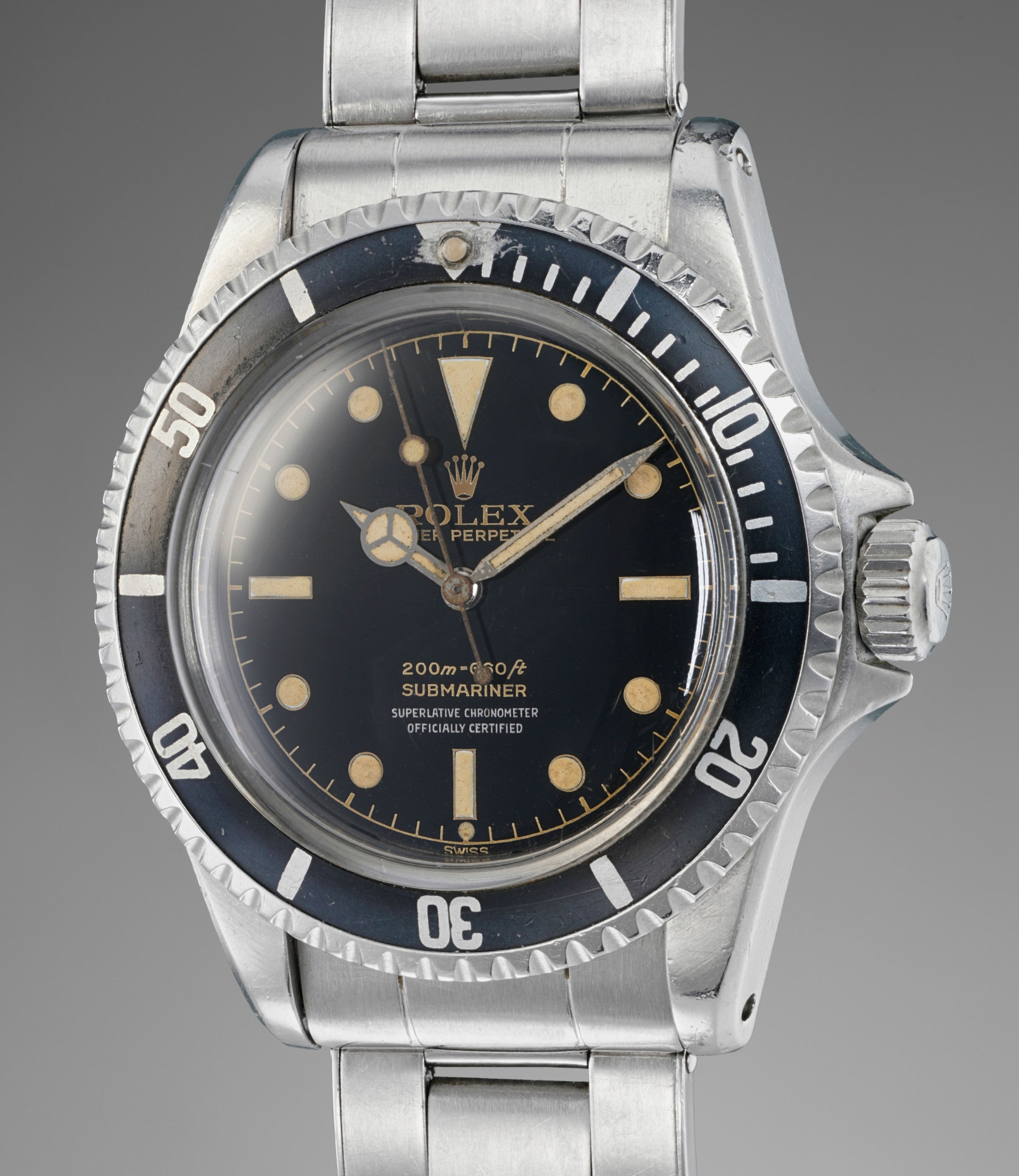
That spec sheet is what you check the watch against. If the reference says applied gold indices and the watch has printed indices, the dial has been replaced. If the reference says caliber 1570 and the movement reads 1530, the movement has been swapped. The reference is the truth; the watch in front of you is the claim.
Reference numbers tell you what was made. Serial numbers tell you when. The pair tells you whether the watch in front of you is the watch the seller says it is.
Eric Wind, vintage Rolex specialist
Dial variants — the most-forged surface
The dial is the face of the watch and the surface most likely to have been altered. Vintage dials come in a handful of variant types that age differently and command different prices. Gilt dials — printed in gold leaf on a black lacquered base — age toward warm chocolate browns and command premiums of 3 to 10 times over the matte equivalents on the same reference. Matte dials, introduced on most tool-watch lines in the 1970s, age toward charcoal or, on tropical examples, toward brown.
Lume material dates the dial. Radium lume was used through 1962 and is measurably radioactive (low dose, but real). Tritium replaced radium from 1962 to 1998 — tritium ages tropical, turning yellow or cream, and is the dominant lume on the vintage segment that matters most for authentication. Super-LumiNova replaced tritium from 1998 onward and does not age. A 1971 Submariner with bright white modern lume has been relumed; the watch is no longer honest.
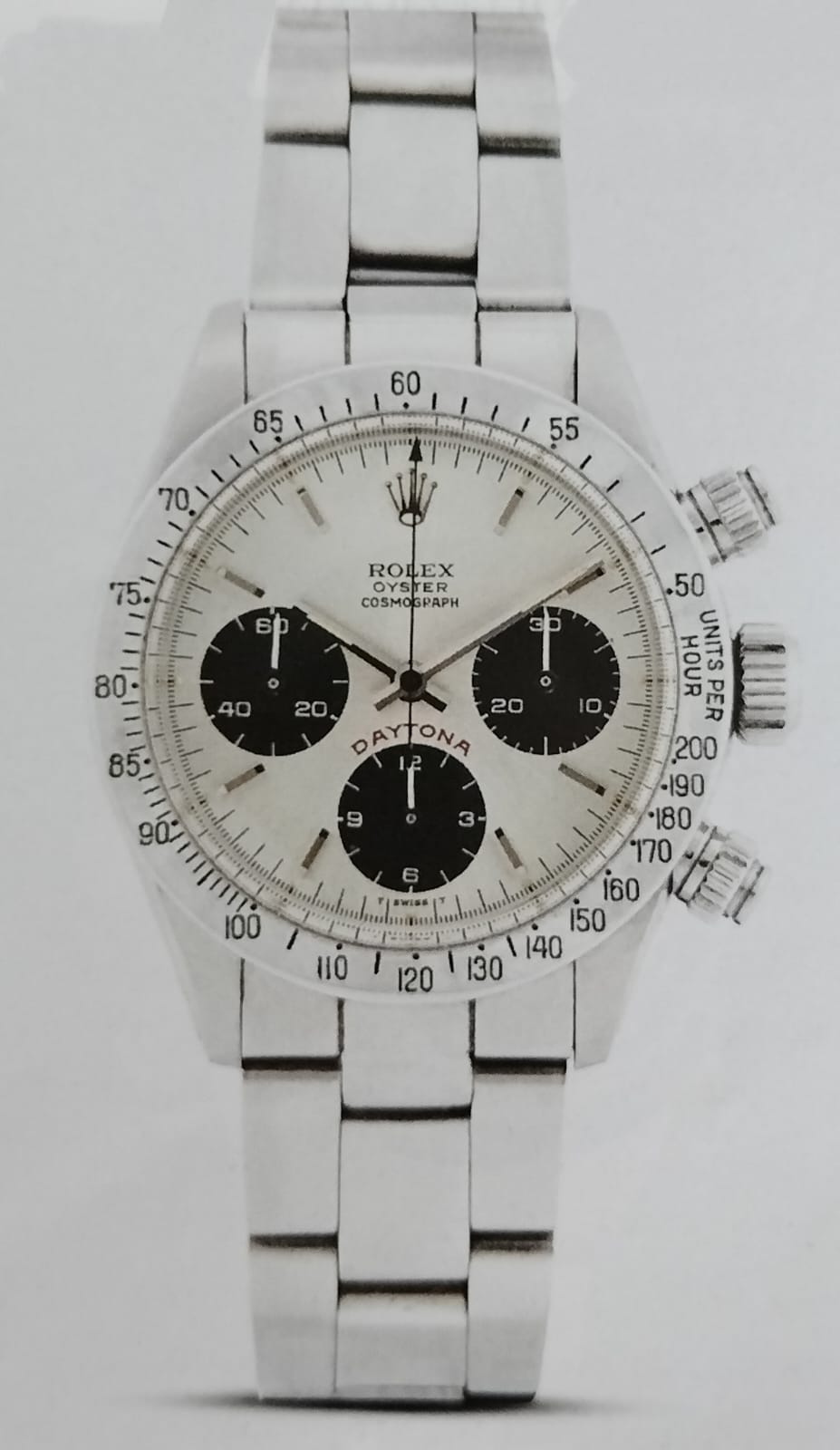
Variant-specific dials are the most-desirable and the most-forged. Rolex “underline” dials (a small horizontal line under the depth rating, used briefly in 1963 as Rolex transitioned lume materials) command 30 to 80 percent premiums. Patek Philippe “pulsation” dials (chronographs scaled for a physician’s pulse measurement) trade for multiples of standard variants. Heuer “ghost” dials (matte black sub-registers that have faded to gray) on vintage Carrera 2447 references run at deep premiums. Each of these is a forger’s target. A confident vintage buyer learns to recognize the font weight, the spacing of the brand wordmark, the depth and edge of the printing, and the way each variant ages — and treats every claimed rare variant as guilty until verified.
Hands as the authentication anchor
Hands are the single most reliable tell for whether a watch is honest. Original hands carry original lume. Service hands (replaced during a service event, often decades ago) carry service lume — a different formulation, a different aging curve, sometimes a different shape. The single most common red flag in vintage authentication is a lume mismatch between the hands and the dial. Original lume should match across every luminescent surface on the watch — hour markers, hands, and any pip on the bezel, all aged to the same color and intensity.
On a tropical-dial vintage Submariner, the hour markers, the hour hand, the minute hand, and the bezel pip should all read the same warm cream. If the markers are warm cream but the hands are stark white, the hands have been replaced. If the hands match each other but not the dial, both hands have been replaced together — the dial is original, the hands are not. Over a decades-long ownership history, the probability that a service department replaced hands at some point is high. That alone does not destroy the watch; it does mean the piece is no longer fully original, and the price should reflect that.
If the lume on the hands doesn’t match the lume on the dial, you are looking at a service watch — not a vintage one.
Case proportions and the polishing problem
Vintage cases were often polished aggressively during service. A typical Rolex service through the 1980s included a full case polish, which softens the sharp factory lug profiles and rounds off the edges that make a vintage piece look vintage. Compare any case in front of you to high-resolution archive photos of the factory-fresh reference. Original lugs are sharp at the edge; over-polished lugs are rounded. Original brushed surfaces should be brushed and polished surfaces should be polished — a watch where everything has been mirror-polished is a watch that has lost its original finish architecture.
Bezels are removable parts, and that makes them a common franken-watch trick. A $20,000 Submariner with a swapped bezel insert (an $80 part, sourced from a donor watch or a reproduction supplier) is the classic case. The bezel insert is hard to authenticate from photos alone; in person, look for the font weight on the 60-minute index, the depth of the printing, the way the lume pip ages, and whether the bezel insert color matches what the dial has done over the same decades. Crowns, crystals, and case backs can also be swapped, and on tool watches each swap shaves originality.
Movement — the back-of-the-watch test
The case back must come off. A vintage watch sold without a movement inspection is a watch sold sight-unseen on the part that matters most, and the part that’s hardest to fake. The movement carries its own caliber number and frequently its own serial. On a Rolex 5513, the movement should be caliber 1530 (1962 to 1965) or caliber 1520 (1965 to 1989) or caliber 1570 / 1575 depending on the exact production year — and the wrong caliber for the reference is a clear red flag. On an Omega Speedmaster 145.012, the movement should be caliber 321; a 145.022 carries caliber 861. The caliber is a date stamp.
Movement finishing matters too. Original movements show consistent factory finishing — perlage, Côtes de Genève, anglage — that a service replacement part may not match. Look for the caliber engraving, the serial (where present), the rotor or bridge signatures, and whether the parts visible through the back match what the reference’s archive photos show. This is the section of the authentication where a watchmaker’s eye matters most. Pay for it.
Papers, boxes, and provenance
Original purchase papers, warranty cards, original boxes, and period-correct service receipts add 20 to 40 percent to value on most vintage references. A “full set” piece — papers, box, service history, original strap or bracelet, hang tags — is the gold standard, and full sets trade at meaningful premiums to equivalent watches sold loose. Provenance — the documented chain of ownership from production to today — can multiply value by 100 times or more on the right piece. A Speedmaster issued by NASA to an Apollo astronaut, a Daytona owned and worn by Paul Newman, a Patek Calatrava with a presentation engraving from the original purchase — these are not the same market as a clean example without that history.
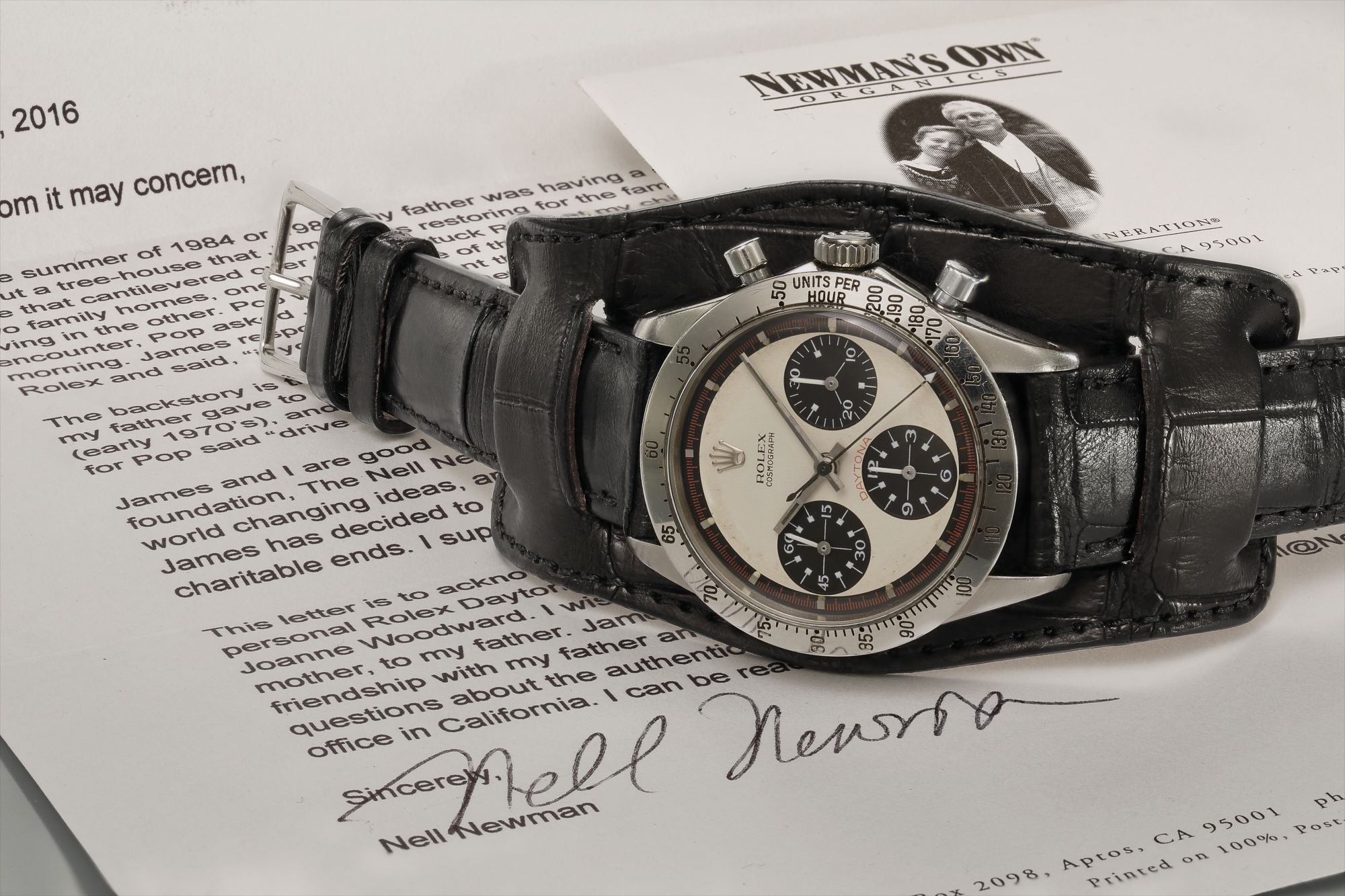
Verify papers against the watch on three axes: reference, serial, date. The reference on the papers should match the reference on the case. The serial on the papers should match the serial between the lugs. The date stamped on the papers should fall inside the manufacturing window for that reference. Be alert to papers that “match” a watch but were originally issued to a different watch — the original papers got lost decades ago, and a set of close-matching papers was bought to complete the package. The fingerprint of authentic papers is specific to the era: the dealer stamp, the typewriter or handwriting style, the paper stock, the ink. Each of these is researchable.
Common red flags — the field guide
- Polished case with no sharp edges. Original vintage cases have crisp lug profiles. Heavy polish rounds them off. A 1965 watch with rounded lugs has been polished, often more than once.
- Wrong caliber for the reference. Each reference has a specific caliber (or short list of calibers) that came in it. Caliber-reference mismatch is a clear red flag.
- Redial. Font weight wrong, brand wordmark slightly off, edges of the printing too crisp, depth-rating numerals at the wrong position. The replacement dial passes a glance and fails a loupe.
- Wrong hands. Lume mismatch between hands and dial markers. Hand shape or length doesn’t match the reference’s archive spec.
- Case-back text doesn’t match production year. Engraving styles, depth ratings, and brand wordmarks evolved across the production run. A 1965 case-back design on a 1972 reference is wrong.
- Papers but no box, or box but no papers. Half-sets are common and not in themselves disqualifying, but be especially careful that the half that’s present actually matches the watch.
- Papers that don’t match the watch. Typed papers in a handwritten era. Wrong dealer stamp for the country. Wrong date for the reference. Serial mismatch.
- Unusual prosperity. A 60-year-old watch with zero patina, factory-fresh lume, and untouched case finish is statistically improbable. Either the watch lived in a safe its entire life (rare but documented), or the watch has been cosmetically restored. Default to the second hypothesis.
- “Service” parts swapped silently. A seller who lists the watch as fully original and answers questions about service history with “none” on a 50-year-old piece is either uninformed or evasive. Both are reasons to slow down.
When to walk away
Some signals are not red flags but full stops. Walk away when the price is well below the market floor for the reference in the claimed condition — a clean 1970s Speedmaster with full original NASA paperwork at half retail does not exist honestly. Walk away when the seller refuses an in-person exam, refuses an escrow service, refuses a return window for an independent watchmaker assessment, or refuses to take the case back off in front of you. Walk away when the photos are blurry, when the angles hide the dial or case edges, when key details are consistently obscured. Walk away when the seller cannot explain provenance gaps — the watch lived somewhere between its production date and today, and the gaps should be accountable.
The vintage market is large enough that no single deal is worth the risk of a wire transfer to a seller who will not stand behind the piece. There is always another watch.
The seller who refuses an in-person exam is telling you something. Listen.
When to pay for a watchmaker exam
Anything over $5,000 from a non-major auction source should pass through a watchmaker authentication before you wire money. A standard exam from a qualified independent watchmaker runs $150 to $500 — case-back open, movement caliber and serial verified, dial and hands inspected under loupe, basic period-correctness assessed. For higher-value pieces or rare references, brand-specific specialists charge $500 to $2,500-plus and provide a full written report you can use as evidence in a dispute.
Joel Pynson is the recognized name on vintage Rolex. Phil Auguste covers vintage Patek Philippe at the upper end. Eric Wind handles vintage Rolex and Audemars Piguet through Wind Vintage. There are regional specialists in every major market, and most reputable dealers will recommend an independent reviewer if asked. The cost of an exam is small relative to the cost of getting the watch wrong — the math is the same as a pre-purchase inspection on a vintage car.
The serial-versus-reference check
Every legitimate watch has a serial that ties to a production year. Most major brands issued serials in roughly chronological blocks across each year of production, and those blocks are documented — for Rolex, by Mondani and the brand-archive community; for Omega, through Omega’s own production records and the Speedmaster Tutor; for Patek Philippe, through the Extract from the Archives service the brand will provide on request.
The check is straightforward. Take the serial number on the watch. Look up the year that serial range was produced. Compare to the manufacturing window for the reference. A 1962 Submariner reference 5513 should have a 4-digit serial in the 850,000 to 900,000 range. If the reference is 5513 but the serial is a 7-digit number, the watch is either much later in the production run or a franken-watch built around a non-period case. Either possibility changes the price, and at the upper end it changes whether you should buy the watch at all.
Authentication, in the end, is the discipline of treating the watch in front of you as a claim that has to be verified component by component — reference, dial, hands, case, movement, papers, serial — against the documented record of what that reference was supposed to be when it left the factory. Honest pieces survive that scrutiny. Franken-watches and redials do not. The vintage market rewards the buyers who do the work.